
Has it ever happened to you that your ear feels sore? Maybe there’s pressure. Maybe it feels slightly blocked or heavy. You assume it’s an infection, so you get it checked. But then you’re told everything looks normal. That’s when the confusion starts.
If you’re experiencing ear pain without an ear infection, your jaw joint could be the real source of the problem. The temporomandibular joint (TMJ), the joint that connects your jaw to your skull, sits just in front of your ear. When this joint becomes inflamed, misaligned, or overworked, it can send pain signals that feel exactly like an ear problem.
Many people spend months treating ear issues without relief, simply because the root cause is actually jaw-related.
In this blog, we’ll explore the connection between TMJ disorders and ear pain, what symptoms to watch for, how to tell the difference between jaw-related discomfort and a true ear infection. By the end, you’ll have a clearer understanding of whether your symptoms point to the ear, or to your jaw.
What Is Temporomandibular Joint (TMJ)? And Can TMJ Cause Ear Pain?
The temporomandibular joint, or TMJ, is the hinge that connects your lower jaw to your skull. You have one on each side of your face, sitting just in front of your ears. This joint allows you to chew, speak, yawn, and swallow. It works every time you open or close your mouth.
Because of its location, the jaw joint and ear pain connection is not random. The joint sits extremely close to the ear canal. In fact, only a thin layer of bone and soft tissue separates them. As a result, when the TMJ becomes irritated, the pain can easily feel like it’s coming from inside the ear.
So, can TMJ cause ear pain? Yes, and more often than people realize.
How TMJ Disorders Develop
A TMJ disorder happens when the joint, the cartilage disc inside it, or the surrounding muscles stop working smoothly. This can occur due to:
- Teeth grinding or clenching (Bruxism).
- Chronic stress.
- Arthritis.
- Jaw injury.
- Bite misalignment.
- Muscle overuse.
Over time, these issues strain the joint, tighten the muscles, build inflammation, and make movement uneven, and that’s when symptoms begin.
How TMJ Disorders Cause Ear Pain
TMJ disorders cause ear pain because of anatomy, nerve overlap, and muscle tension. The jaw joint and the ear sit extremely close to each other. In fact, they share space, connective tissues, and important nerve pathways. When one becomes irritated, the other often feels it.
Here’s what happens.
1. Shared Nerve Pathways
The TMJ and the ear share branches of the trigeminal nerve. When the joint is inflamed, pain signals travel through these nerves. However, your brain may interpret those signals as coming from the ear. This is called referred pain, and it explains why TMJ disorder ear pain feels so real.
2. Muscle Tension
The chewing muscles sit right beside the ear canal. If you clench or grind your teeth, these muscles tighten. That tension can cause:
- Ear pressure.
- A dull ache.
- A blocked or heavy sensation.
3. Inflammation and Pressure
When the TMJ becomes inflamed from overuse or grinding, the surrounding tissues swell. Since the joint sits directly beside the ear, that swelling can create pressure that feels like ear pain.
Beyond pain, TMJ disorders can be accompanied by several non-painful but disruptive symptoms because the jaw joint affects nearby nerves, muscles, and balance structures.
Many patients experience jaw pain and ear fullness together, along with other related symptoms such as:
- Muffled hearing or sound sensitivity.
- Tinnitus (ringing, buzzing, or humming sounds).
- Dizziness or a floating sensation.
- Jaw locking or limited mouth opening.
- Clicking, popping, or grinding sounds when moving the jaw.
- Facial fatigue, especially after talking or chewing.
- Neck and shoulder tightness.
- Headaches or migraine-like pressure.
TMJ Ear Pain vs. Ear Infection
These conditions can feel alike at first, but key differences help set them apart.
| TMJ-Related Ear Pain | Ear Infection |
|---|---|
| Pain increases when chewing or talking. | Pain is not affected by jaw movement. |
| Jaw clicking or popping. | Swelling or redness inside the ear. |
| No fever. | Fever may be present. |
| Ear examination appears normal. | Visible signs of infection during ear examination. |
| Antibiotics do not relieve symptoms. | Antibiotics often improve symptoms. |
| May include jaw stiffness or locking. | Often follows a cold or sinus infection. |
If your symptoms worsen when you move your jaw, there’s a strong chance you’re dealing with TMJ disorder ear pain rather than an infection.
Why Is Ear Pain Related to TMJ Disorder Frequently Misdiagnosed?
Most people visit their primary care doctor or ENT first. That makes sense. Ear pain feels like an ear problem. However, many routine exams don’t include a detailed jaw assessment. If the ear looks clear, patients sometimes leave without answers.
In addition, imaging may not reveal obvious joint damage. TMJ disorders often involve muscle tension or subtle joint inflammation, which can be harder to detect. Because of this, patients cycle through decongestants, allergy medications, or antibiotics without relief.
That’s when it becomes important to consult a TMJ specialist who understands the connection between jaw function and ear symptoms.
How Does a TMJ Specialist Diagnose the Problem?
Diagnosing TMJ ear pain requires more than a quick look inside the ear. Because the symptoms often mimic ear infections, sinus issues, or tension headaches, a proper evaluation focuses on the jaw joint, surrounding muscles, and bite alignment.
A TMJ specialist typically begins with a detailed clinical examination. This may include:
- Assessing jaw range of motion.
- Checking for clicking, popping, or grinding sounds.
- Applying gentle pressure to facial and jaw muscles to detect tenderness.
- Evaluating how the upper and lower teeth align.
- Using digital imaging (such as X-rays or 3D scans) when necessary.
Treatment Options for TMJ-Related Ear Pain
Treatment depends on severity, but options often include:
1: Conservative Care
- Soft diet for a few weeks.
- Warm compresses.
- Gentle jaw stretches.
- Stress reduction techniques.
Sometimes, small changes make a noticeable difference.
2: Custom Oral Appliances
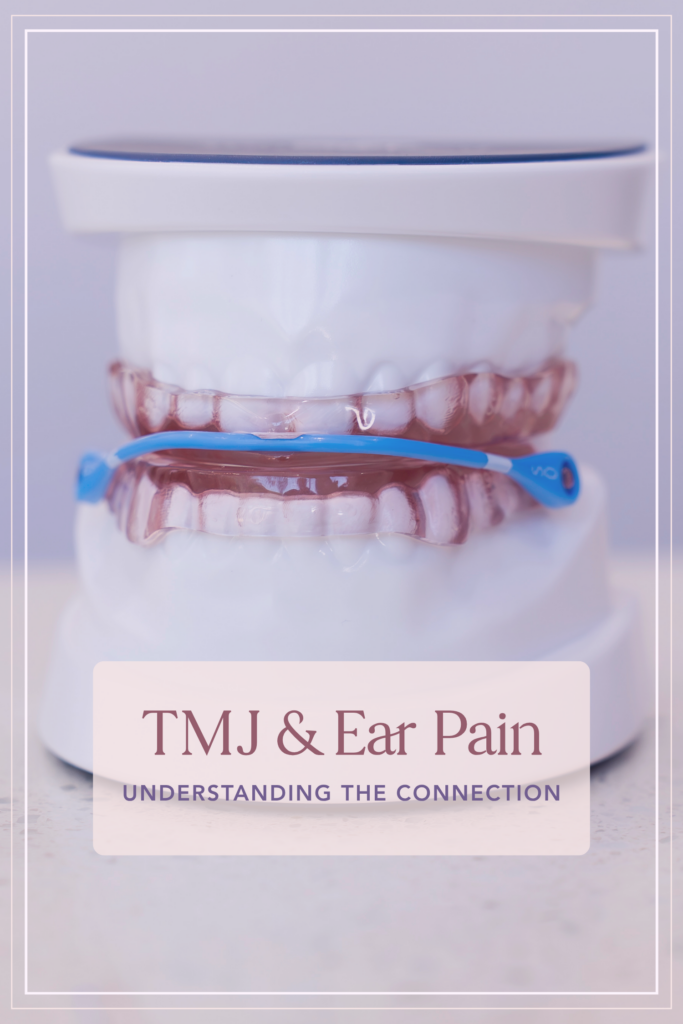
Nightguards or bite splints reduce clenching and protect the joint. In many patients, this alone significantly reduces jaw pain and ear fullness.
3: Physical Therapy
Targeted physical therapy for TMJ focuses on restoring proper jaw movement and reducing muscle overactivity. Guided exercises help strengthen weak muscles, stretch tight tissues, and improve joint coordination.
Advanced Options
For persistent cases, treatment may include:
- Botox to relax overactive muscles.
- Orthodontic correction for bite imbalance.
- Minimally invasive joint procedures.
Treatment options vary based on your symptoms, jaw function, and overall oral health. A personalized evaluation helps determine the most effective approach for long-term relief.
When Should You Seek Professional Help?
Occasional jaw discomfort or mild ear pressure may resolve with rest and simple self-care. However, you should consider a professional evaluation if:
- Ear pain persists despite a normal ear exam.
- Symptoms last longer than a few weeks.
- Jaw movement feels restricted or painful.
- Clicking or locking becomes frequent.
- Headaches, facial tension, or neck stiffness worsen.
- Over-the-counter pain relief provides only temporary improvement.
Early intervention matters. TMJ disorders tend to progress when left untreated, especially if clenching, grinding, or bite imbalance continues. What begins as mild discomfort can gradually develop into chronic inflammation, muscle dysfunction, and more persistent pain.
Find TMJ Relief at Sana Dental Studio
If you’ve been struggling with persistent jaw discomfort, pressure near the ear, or symptoms that feel like an ear problem without a clear diagnosis, the underlying issue may be TMJ-related. At Sana Dental Studio, the focus is on providing effective TMJ pain relief by addressing the root cause, not just masking the symptoms. Contact us today to book your consultation and take the first step toward lasting relief.
Conclusion
Ear pain without infection can be frustrating, confusing, and exhausting, especially when treatments don’t bring relief.
If your ear discomfort worsens with chewing, talking, or jaw movement, your symptoms may not be coming from the ear at all. They may be your jaw asking for attention.
The good news is that TMJ-related ear pain is treatable. With the right diagnosis and a personalized treatment plan, you can reduce inflammation, ease muscle tension, and restore comfortable jaw function.
Key Takeaways
- Temporomandibular joint (TMJ) disorders can cause ear pain even when no ear infection is present.
- Referred pain from shared nerve pathways can make TMJ discomfort feel exactly like an ear infection.
- Jaw movement that worsens ear discomfort is a strong sign; the issue may be TMJ-related.
- Symptoms like ear pressure, ringing, jaw clicking, headaches, and facial tension often occur together.
- A proper TMJ evaluation focuses on jaw movement, muscle tenderness, bite alignment, and joint health.